
Fractional Laser Resurfacing for Texture and Lines
Fractional laser resurfacing treats skin for texture and lines, and the first decision, which technique, is not yours to make alone. DermNet says the main laser resurfacing techniques used today are non-ablative laser systems, fractional resurfacing systems, and combined systems. Choosing among them is a conversation for the clinic, which is why the at-home share of this treatment is small.
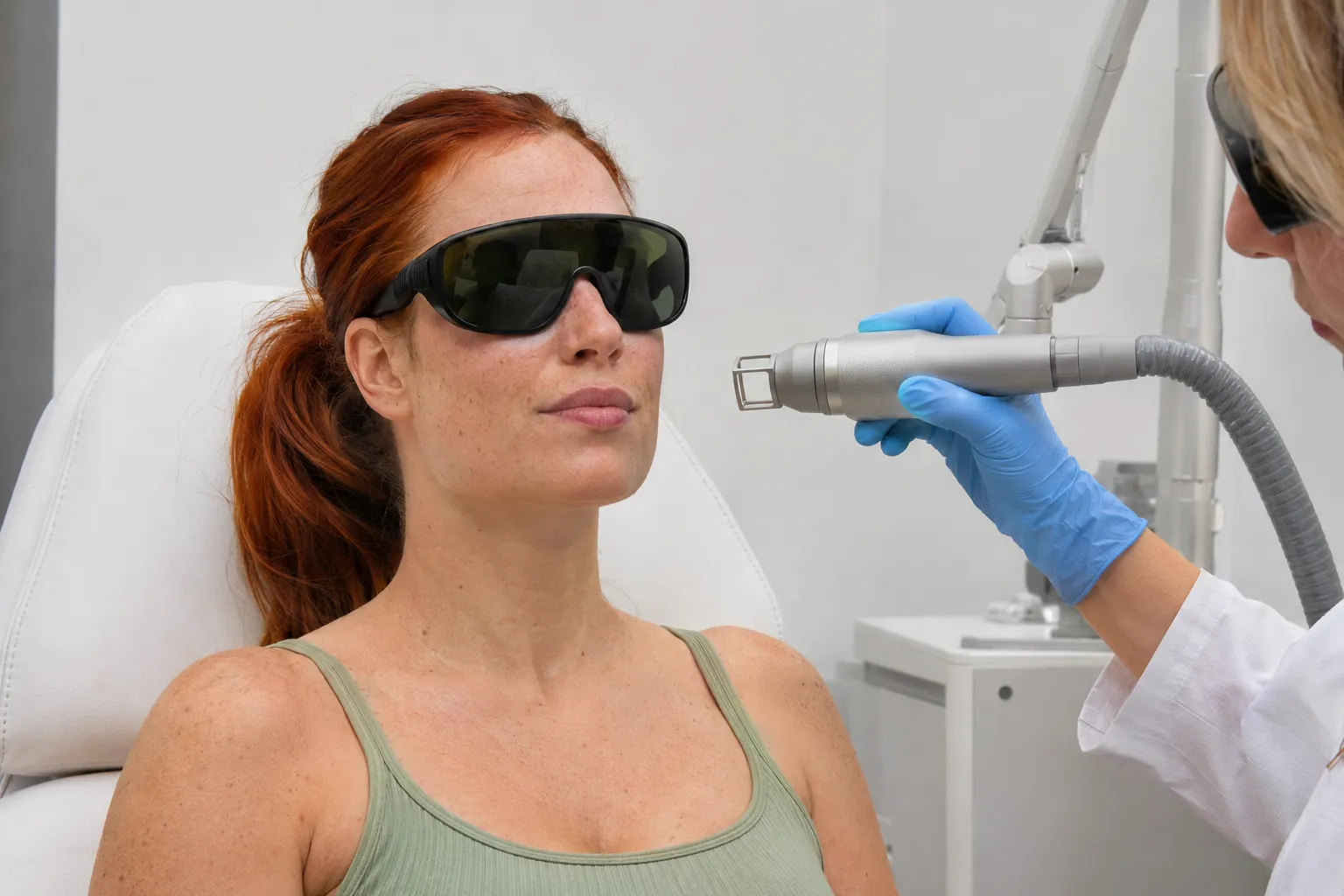
Penn Medicine adds that ablative fractional laser resurfacing, for example, combines the skin-smoothing benefits of older technologies with quicker recovery and more predictable results. Quicker recovery is not the same as no recovery, and the clinic, not a forum, is where you learn what yours looks like. Readers who want the medical literature can start with NCBI PubMed Central (NIH), which hosts Laser Resurfacing Pearls.
The shortcuts each article talks you out of
- Carbon Dioxide Laser Healing Time and Redness talks you out of judging your own healing against a number you found online.
- Acne Scar Laser Options by Skin Tone talks you out of picking a laser for yourself.
- Fractional Carbon Dioxide Candidacy and Realistic Gains talks you out of declaring yourself a candidate.
- Why Fractional Lasers Shorten Healing talks you out of assuming that shorter healing means less care.
- Outpatient Laser Treatment Day Basics talks you out of improvising the day of treatment.
Where the line sits, and when to phone
The line sits close to the clinic door. Decisions about technique, candidacy and healing belong to the clinician who has examined your skin, and the home task is following the written instructions that clinician gives you. When a question about healing is not answered by those instructions, call. For the research side, a review of sequential fractional CO2 and 1540/1570 nm lasers gathers preclinical and clinical evidence, and it is a reading list for your consultation, not a treatment plan.